
Scan our QR code to stay updated with the recent news and upcoming events.
Scan our QR code to stay updated with the recent news and upcoming events.
2026.10.11-11-06
Li Daocheng: Red as Memory
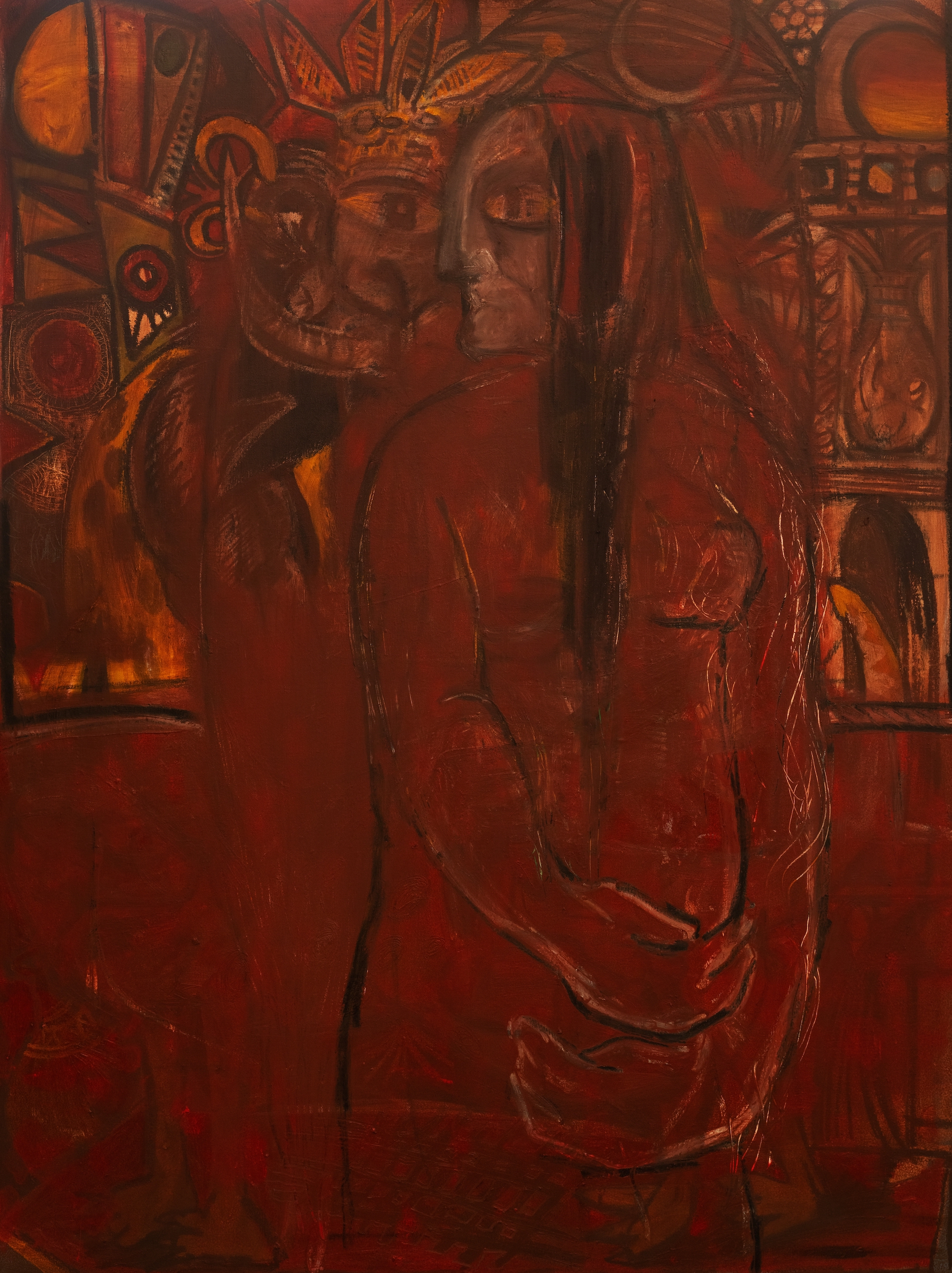
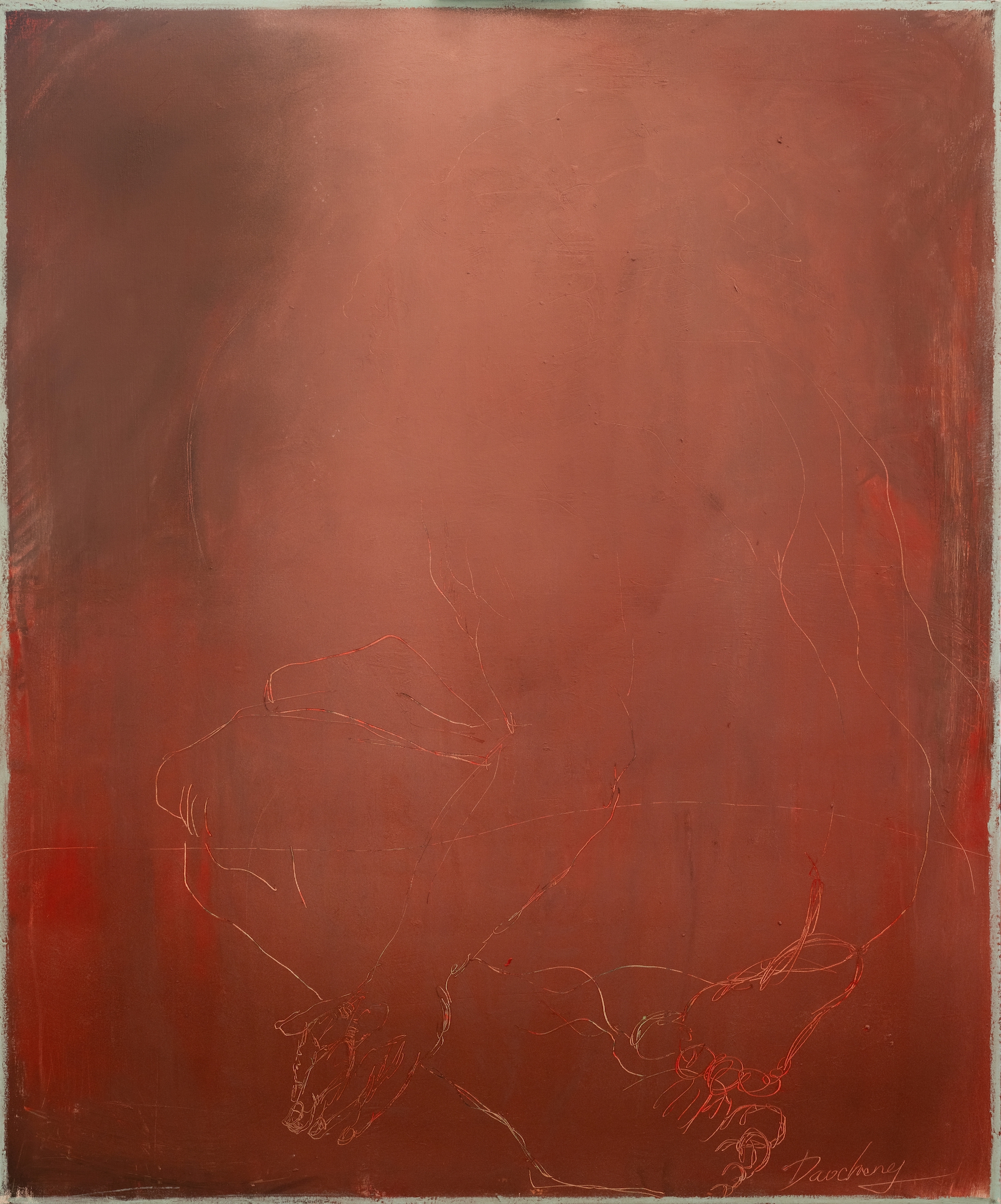
Art+ Shanghai is pleased to present Red as Memory, an exhibition of recent paintings by Li Daocheng that investigates memory not as a stable archive of the past, but as an unstable field of emergence. Across these works, bodies, vessels, flowers, animals, and architectural fragments surface only to be obscured, transformed, or absorbed once again into the painted ground. The image is never treated as something complete or determined in advance. Instead, it arises through an extended negotiation between intention and contingency, recognition and uncertainty, material action and perceptual response. Painting becomes less a means of representing an already existing world than a process through which a world gradually assumes form.
Li begins from the unknown. He neither establishes a fixed composition before approaching the canvas nor adopts beauty as the primary criterion by which the work should be organized. Pigment is applied, covered, erased, scraped open, dragged across the surface, and layered again. Lines retain the physical traces of movement without necessarily submitting to a predetermined structure. Forms appear within this process almost involuntarily, as though summoned from the accumulated matter of the painting itself. Even after a figure becomes visible, it remains provisional: the next gesture may conceal it, displace it, or redirect its meaning.
This method approaches the Daoist principle of wuwei 无为, conventionally translated as “non-action.” Yet wuwei does not signify passivity or withdrawal. It describes an action that relinquishes the desire to dominate its outcome, an attentiveness to processes that exceed individual will. Li’s practice similarly resonates with ziran 自然, understood not simply as the visible forms of nature, but as the condition of “self-so-ness” through which phenomena arise according to their own generative logic. Rather than imposing order upon the canvas, the artist establishes the conditions within which order may emerge. Chaos is therefore neither an obstacle to be overcome nor a stylistic effect to be simulated. It is the productive ground of painting: a field of latent possibilities from which images temporarily materialize.
This process situates Li’s paintings along the unstable threshold between figuration and abstraction. Figures and objects are present, but they resist narrative certainty. Bodies become landscapes; vessels acquire a corporeal presence; flowers appear as compressed signs of vitality and decay. Arches, tabletops, frames, and intersecting lines briefly suggest coherent spatial structures, only to be unsettled by overlapping contours and shifting planes. Space is not constructed through a consistent perspectival system. It accumulates through successive decisions, revisions, and erasures, preserving multiple temporal states within a single surface. The painting operates as a palimpsest in which what has disappeared continues to exert pressure upon what remains visible.
The vessel occupies a central place within this visual constellation. At once container, body, and mnemonic form, it evokes the capacity to preserve while simultaneously registering absence. Its hollow interior may hold what cannot be fully articulated through language, yet its darkened opening also points toward loss and unknowability. Like memory itself, the vessel is defined as much by what is absent as by what is retained. Flowers, animals, and hybrid human forms extend this instability, dissolving the boundaries between the domestic and the mythic, the animate and the inanimate, the bodily and the non-bodily. These motifs do not form a fixed symbolic vocabulary. They migrate across the paintings, acquiring new meanings through repetition, deformation, and unexpected proximity.
Red provides the material and psychological climate within which these transformations occur. It is not merely one chromatic element among others, nor does it illustrate a single emotion. Red evokes flesh, soil, heat, ritual, vitality, and the accumulated residue of lived experience. It can envelop the surface as an atmosphere from which forms struggle to emerge, or appear as a wound marking where an image has been covered and reopened. Its intensity carries both animation and threat, intimacy and estrangement. Red preserves even as it erases; it makes visible while drawing the image toward dissolution. Emotion consequently resides not in an explicit narrative, but in the physical behavior of pigment—its density, friction, opacity, and exposure.
Li’s work enters into dialogue with the genealogy of Neo-Expressionism through its chromatic intensity, corporeality, unstable figuration, and emphasis on painterly action. Yet these qualities do not constitute the revival of an established style. Rough contours and agitated surfaces function not as expressive conventions, but as evidence of painting’s encounter with uncertainty. They register a subject that cannot be stabilized because it is continually reconstituted through perception, bodily experience, and memory. Expression is not projected onto the canvas as a completed interior state; it emerges materially through the work’s construction and destruction.
Red as Memory ultimately asks a fundamental question: what becomes possible when the artist relinquishes complete control over the image? Here, memory is not a repository from which the past can be retrieved intact. It is an active force that conceals and reveals, preserves and distorts, repeats and transforms. Likewise, the body does not remain a stable identity, but may become a vessel, a landscape, or a form not yet named. Painting becomes a practice of remaining within uncertainty, of resisting the demand for immediate recognition or resolution and allowing the image to unfold on its own terms.
What remains on the canvas is therefore not a world fully mastered by the artist, but a world still in formation. Objects remember bodies; bodies become landscapes; color bears the weight of experience. Every image persists in a state of becoming.
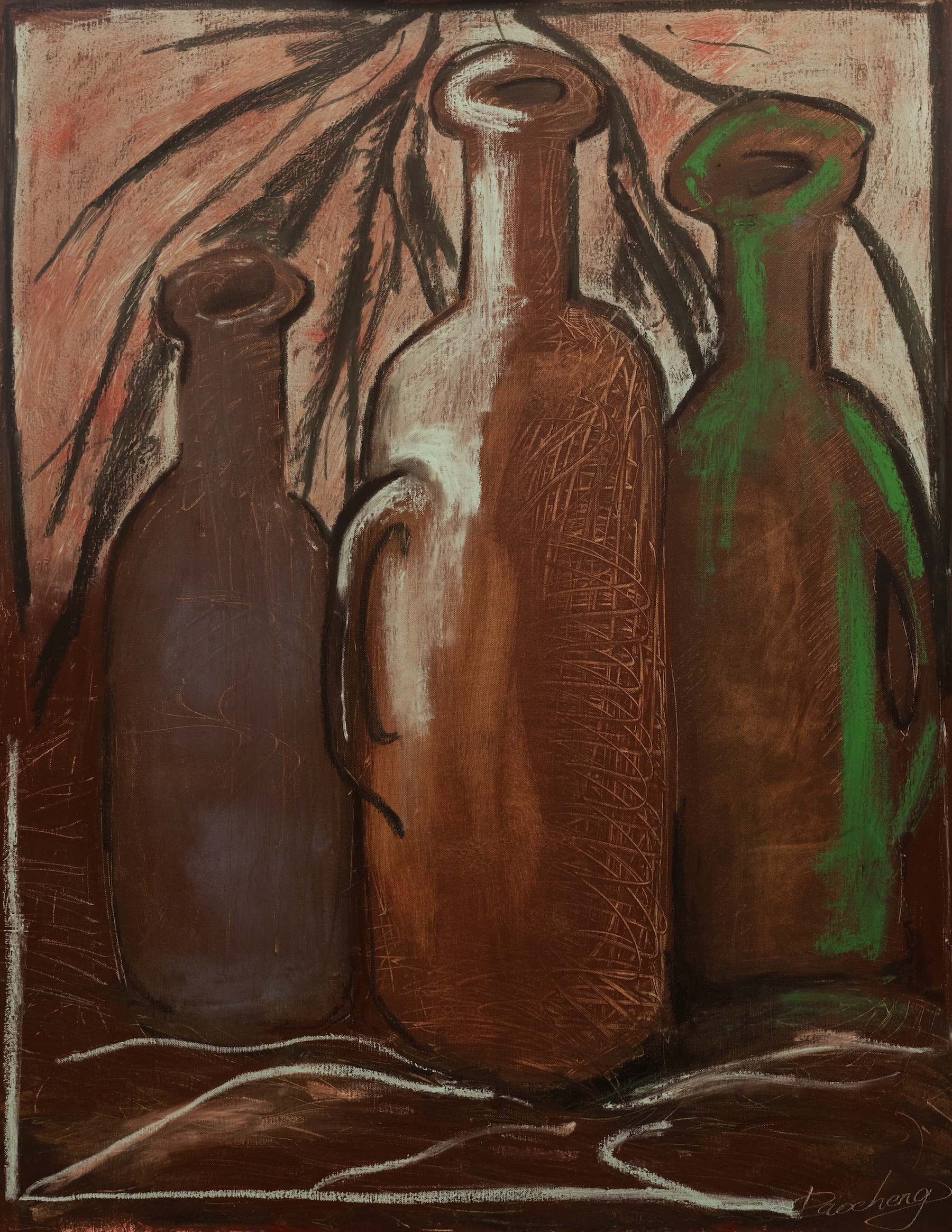
Li Daocheng,
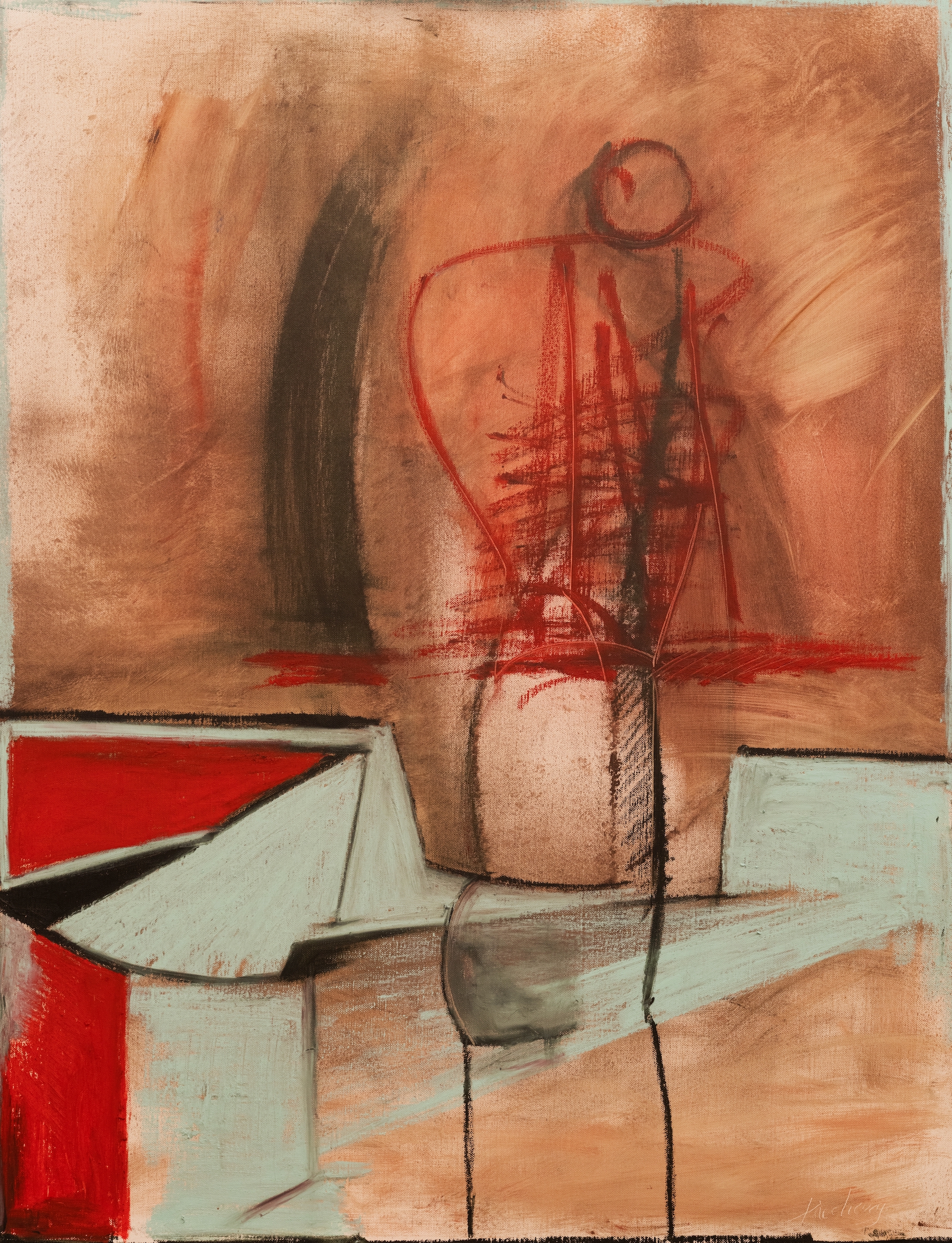
Li Daocheng,
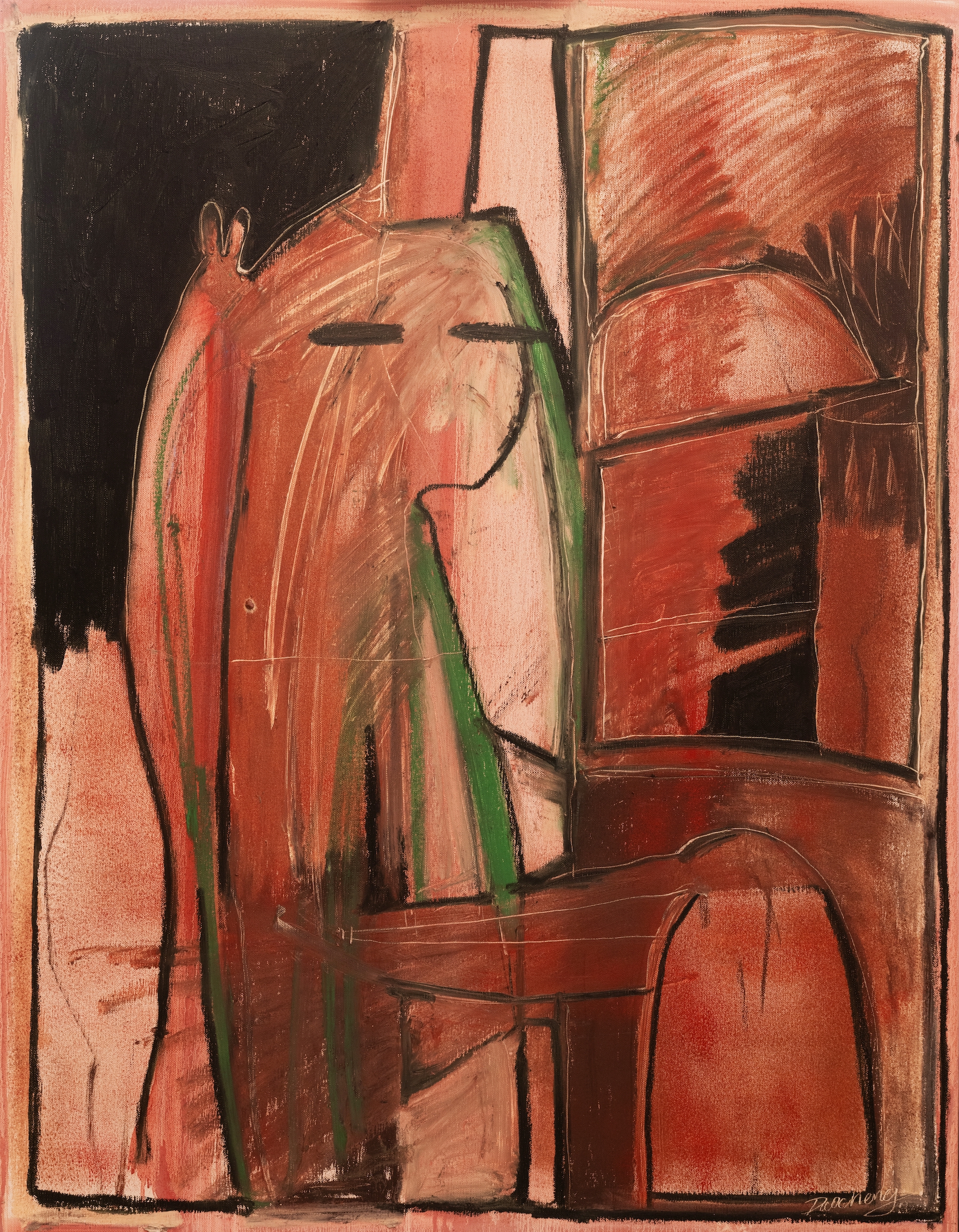
Li Daocheng,
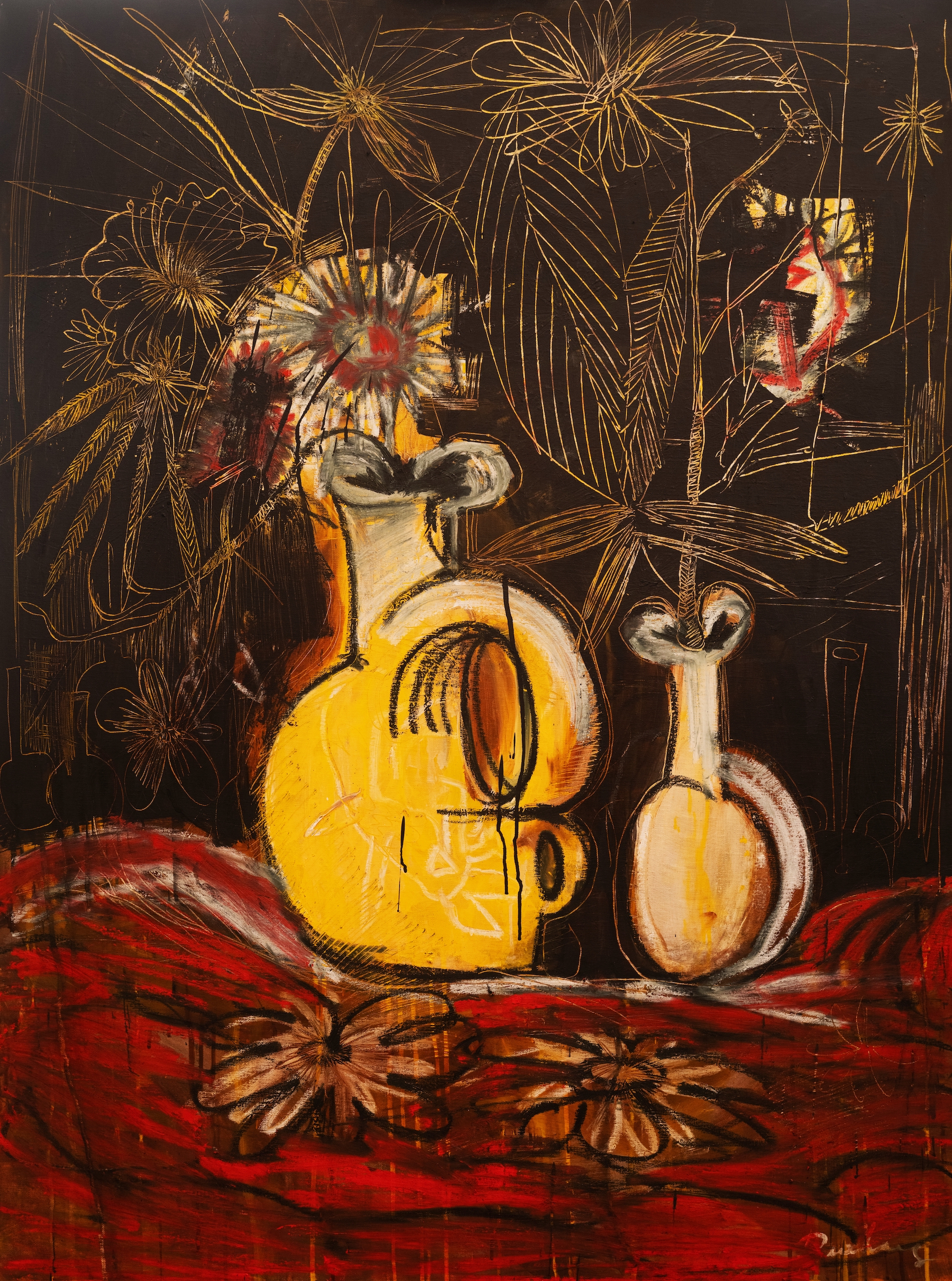
Li Daocheng, Origin - Artificial Objets. Oil on Canvas, 90x70 cm, 2026
Li Daocheng,
Li Daocheng,
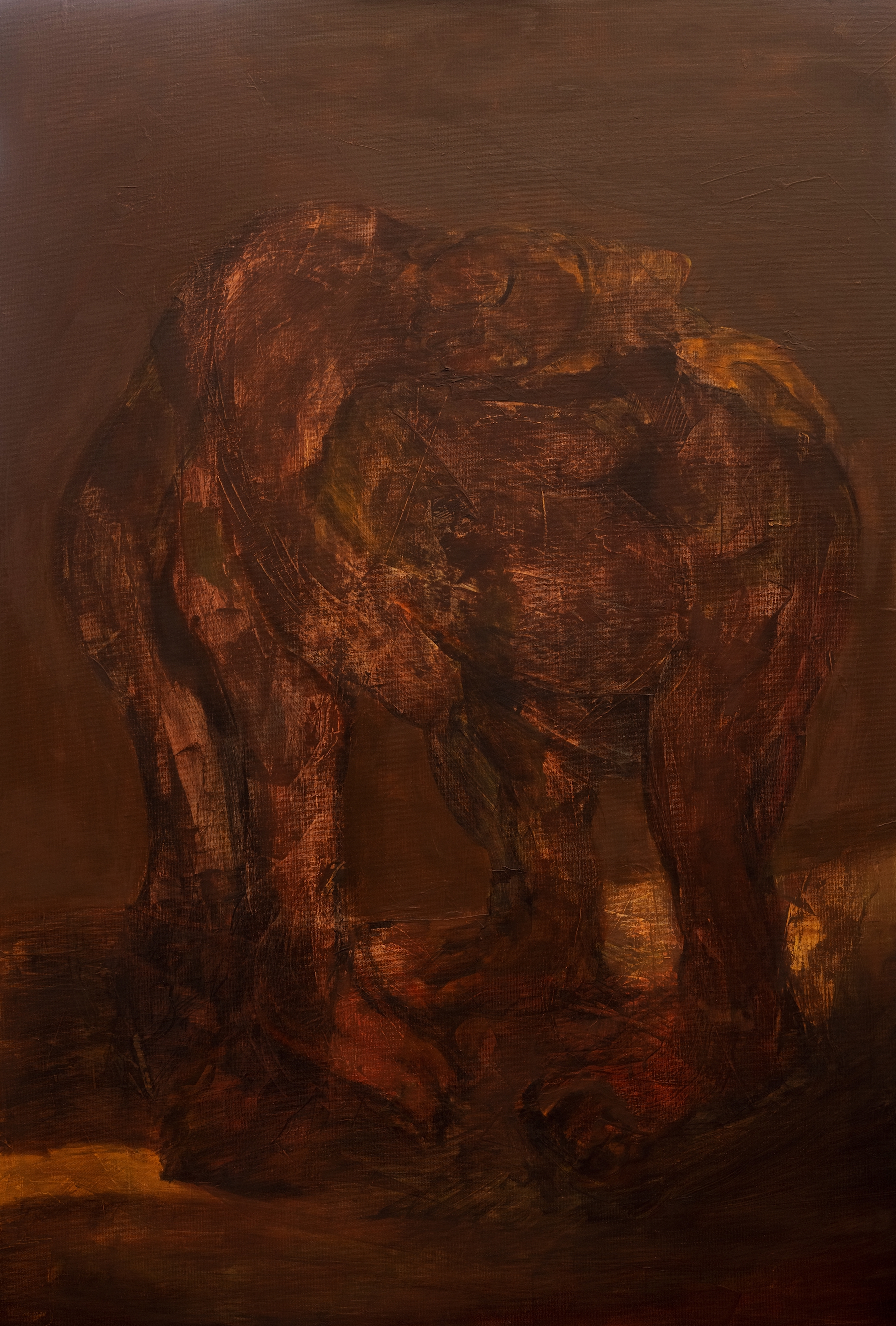
Li Daocheng, Origin -Terrain, Oil on Canvas 105x71cm 2026
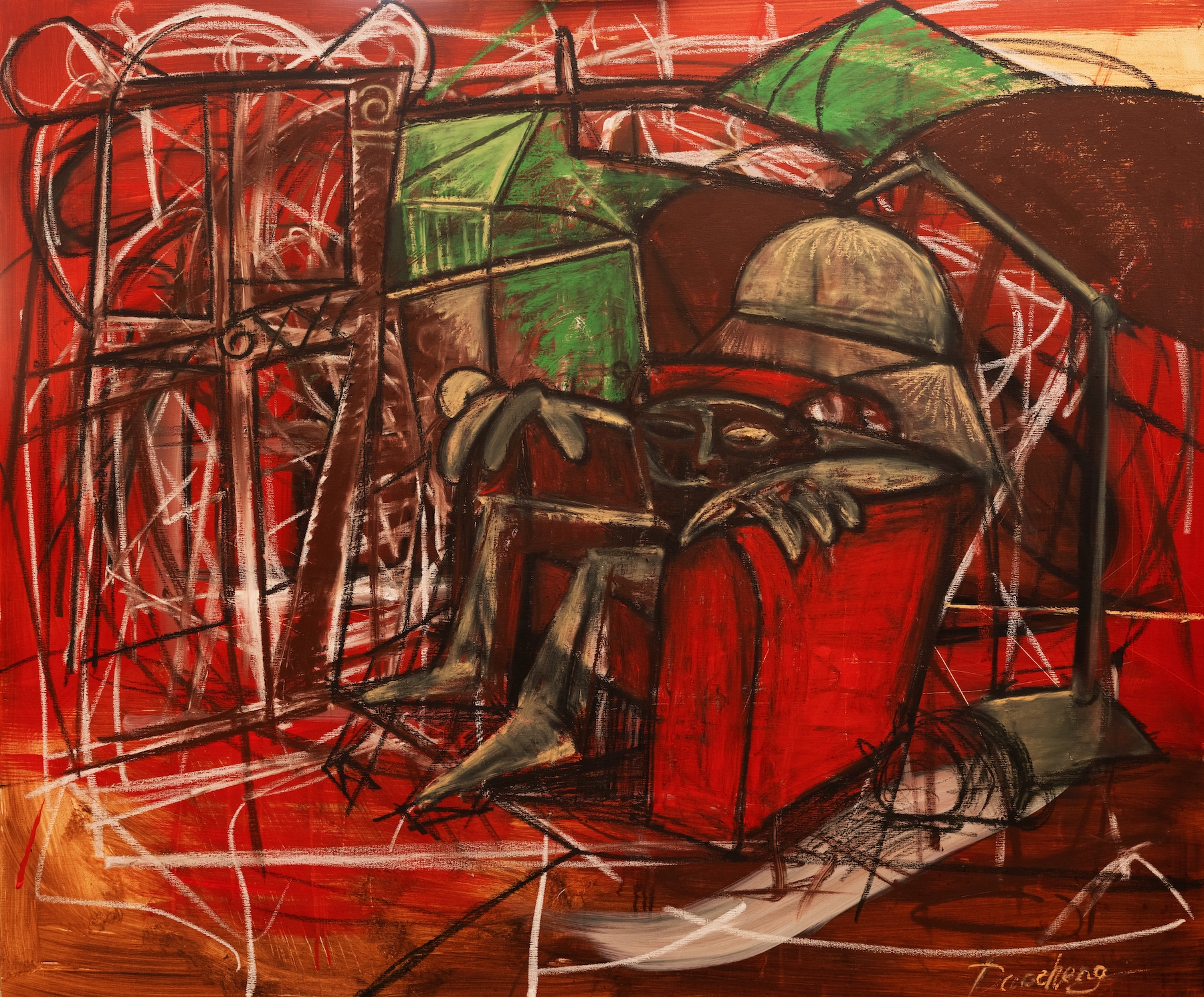
Li Daocheng, Imagined City-Interior, Oil on Canvas 100x120 cm, 2026
Li Daocheng: Red as Memory
Art+ Shanghai is pleased to present Red as Memory, an exhibition of recent paintings by Li Daocheng that investigates memory not as a stable archive of the past, but as an unstable field of emergence. Across these works, bodies, vessels, flowers, animals, and architectural fragments surface only to be obscured, transformed, or absorbed once again into the painted ground. The image is never treated as something complete or determined in advance. Instead, it arises through an extended negotiation between intention and contingency, recognition and uncertainty, material action and perceptual response. Painting becomes less a means of representing an already existing world than a process through which a world gradually assumes form.
Li begins from the unknown. He neither establishes a fixed composition before approaching the canvas nor adopts beauty as the primary criterion by which the work should be organized. Pigment is applied, covered, erased, scraped open, dragged across the surface, and layered again. Lines retain the physical traces of movement without necessarily submitting to a predetermined structure. Forms appear within this process almost involuntarily, as though summoned from the accumulated matter of the painting itself. Even after a figure becomes visible, it remains provisional: the next gesture may conceal it, displace it, or redirect its meaning.
This method approaches the Daoist principle of wuwei 无为, conventionally translated as “non-action.” Yet wuwei does not signify passivity or withdrawal. It describes an action that relinquishes the desire to dominate its outcome, an attentiveness to processes that exceed individual will. Li’s practice similarly resonates with ziran 自然, understood not simply as the visible forms of nature, but as the condition of “self-so-ness” through which phenomena arise according to their own generative logic. Rather than imposing order upon the canvas, the artist establishes the conditions within which order may emerge. Chaos is therefore neither an obstacle to be overcome nor a stylistic effect to be simulated. It is the productive ground of painting: a field of latent possibilities from which images temporarily materialize.
This process situates Li’s paintings along the unstable threshold between figuration and abstraction. Figures and objects are present, but they resist narrative certainty. Bodies become landscapes; vessels acquire a corporeal presence; flowers appear as compressed signs of vitality and decay. Arches, tabletops, frames, and intersecting lines briefly suggest coherent spatial structures, only to be unsettled by overlapping contours and shifting planes. Space is not constructed through a consistent perspectival system. It accumulates through successive decisions, revisions, and erasures, preserving multiple temporal states within a single surface. The painting operates as a palimpsest in which what has disappeared continues to exert pressure upon what remains visible.
The vessel occupies a central place within this visual constellation. At once container, body, and mnemonic form, it evokes the capacity to preserve while simultaneously registering absence. Its hollow interior may hold what cannot be fully articulated through language, yet its darkened opening also points toward loss and unknowability. Like memory itself, the vessel is defined as much by what is absent as by what is retained. Flowers, animals, and hybrid human forms extend this instability, dissolving the boundaries between the domestic and the mythic, the animate and the inanimate, the bodily and the non-bodily. These motifs do not form a fixed symbolic vocabulary. They migrate across the paintings, acquiring new meanings through repetition, deformation, and unexpected proximity.
Red provides the material and psychological climate within which these transformations occur. It is not merely one chromatic element among others, nor does it illustrate a single emotion. Red evokes flesh, soil, heat, ritual, vitality, and the accumulated residue of lived experience. It can envelop the surface as an atmosphere from which forms struggle to emerge, or appear as a wound marking where an image has been covered and reopened. Its intensity carries both animation and threat, intimacy and estrangement. Red preserves even as it erases; it makes visible while drawing the image toward dissolution. Emotion consequently resides not in an explicit narrative, but in the physical behavior of pigment—its density, friction, opacity, and exposure.
Li’s work enters into dialogue with the genealogy of Neo-Expressionism through its chromatic intensity, corporeality, unstable figuration, and emphasis on painterly action. Yet these qualities do not constitute the revival of an established style. Rough contours and agitated surfaces function not as expressive conventions, but as evidence of painting’s encounter with uncertainty. They register a subject that cannot be stabilized because it is continually reconstituted through perception, bodily experience, and memory. Expression is not projected onto the canvas as a completed interior state; it emerges materially through the work’s construction and destruction.
Red as Memory ultimately asks a fundamental question: what becomes possible when the artist relinquishes complete control over the image? Here, memory is not a repository from which the past can be retrieved intact. It is an active force that conceals and reveals, preserves and distorts, repeats and transforms. Likewise, the body does not remain a stable identity, but may become a vessel, a landscape, or a form not yet named. Painting becomes a practice of remaining within uncertainty, of resisting the demand for immediate recognition or resolution and allowing the image to unfold on its own terms.
What remains on the canvas is therefore not a world fully mastered by the artist, but a world still in formation. Objects remember bodies; bodies become landscapes; color bears the weight of experience. Every image persists in a state of becoming.