Scan our QR code to stay updated with the recent news and upcoming events.
Scan our QR code to stay updated with the recent news and upcoming events.
2026.01.08-02.28
Art+ Shanghai is pleased to present a solo exhibition by Wang Dawei, whose recent paintings interrogate the uncomfortable interval between lived experience and interior projection. Through his works, Wang positions painting as a site where affect is neither narrated nor illustrated, but constructed: a disciplined staging of atmosphere through which complex emotions become legible without solidifying into univocal representations. The exhibition's intellectual foundation thus rests on a productive tension between diasporic distance and perceptual intimacy. To distance oneself from a place, for Wang, is paradoxically to intensify sensitivity while allowing appearances to blur, producing images that oscillate between precise memory, floating conjecture, and the fragile clarity of a feeling that resists verbal articulation.
Born in 1984 in Shanghai, Wang Dawei developed his artistic practice between Asia and the United States, where he lives and works today. A graduate of Shanghai Normal University (bachelor's in 2009, master's in 2015), he has established a singular voice in the contemporary art landscape since his first solo exhibition at FQ Projects in 2011. His trajectory demonstrates an ascending and coherent path: regular solo exhibitions in Shanghai and New York; notable presence at Shin Gallery in New York in 2025 and 2023 with "Banal Dreams and Poetic Realities"; participation in major international art fairs (Art021 Shanghai, Art Stage Singapore, SH Contemporary, Los Angeles Art Show). This geographic and professional mobility is not incidental: it directly feeds his work, forged in the circulatory condition of immigrant life in the 21st century.
Wang's practice is rooted in field observation and photographic capture: spontaneous gestures in streets, parks, squares, trains, and urban transitional spaces. But the camera functions less as documentary evidence than as a trigger for material and affective recomposition. In his previous works, recurring figures, guards, workers, people sitting distractedly, often appear at measured distance, held at the periphery of the frame or isolated in intermediate spaces. This distance is not indifference, but a deliberate ethical and narrative strategy: it refuses the reductive certainty of psychological explanation in favor of an open, speculative psychology. The viewer is invited to inhabit what Wang calls "the void," an operative silence within the composition that opens the work to projective interpretation rather than narrative closure.
It is precisely here that Wang's affinity with Raymond Carver's short story Cathedral takes on its full significance. In this emblematic minimalist narrative, Carver recounts a narrator's encounter with a blind man, culminating in a moment of silent connection as they draw a cathedral together. The text never explicitly describes the edifice, leaving it to the reader to imagine, to fill the empty spaces with their own interior experience. For Wang, this narrative economy, where a few lines can evoke a world, becomes a pictorial principle. His paintings cultivate a form of minimalism not merely as stylistic restraint, but as a method of activating the viewer's imagination. As with Carver, ellipsis becomes generativity: what is left unsaid, what remains in shadow or off-frame, possesses as much power as what is shown. Wang's compositions resist visual saturation: they preserve zones of indeterminacy where the gaze can wander, where subjective projection can settle. The work thus becomes a space of tacit co-creation between artist and viewer, a threshold where affect is constructed in the interval.
In the recent paintings presented in this exhibition, Wang develops and deepens this poetics of the void through a decisive tonal economy. Washed-out blues, pale greens, powder pinks, and pastel violets function as a rigorous atmospheric grammar: the hues are kept "simple and pure," in the artist's own words, to control the overall mood, lower dramatic contrast, and sustain a dreamlike register that consciously resists photographic realism. These chromatic choices are not arbitrary: they establish a specific emotional temperature, an interior climate where scenes seem suspended in indeterminate temporality, between memory and projection, between fading day and uncertain dawn.
Technically, Wang employs refined layering processes that combine the fluidity of acrylic with the density of oil or pencil. Acrylic washes, diluted with water and applied in translucent layers, sometimes recall the technique of traditional Chinese ink wash, with its subtle gradations and zones of controlled diffusion. This reference is not anecdotal: it inscribes Wang's practice within a double genealogy, between Chinese pictorial heritage and Western modernism. Oil then intervenes for chromatic mixing and detail, producing surfaces of silent vibration, where spaces seem suspended between material presence and imminent disappearance. Contours partially dissolve, figures emerge and withdraw simultaneously, creating a perceptual instability that mirrors the very experience of uncertain memory.
These new works also mark an evolution in the treatment of architectural and urban space. Interiors, empty rooms, silent corridors, anonymous waiting spaces, become charged with latent affective weight. The light, filtered, diffused, almost tangible, sculpts these volumes and creates zones of shadow that invite the gaze to linger, to question what is hidden or partially revealed. Windows, a recurring motif, function as frames within the frame, visual thresholds suggesting an inaccessible elsewhere, reinforcing the sensation of contemplative isolation.
While comparisons with Wilhelm Hammershøi or Edward Hopper naturally emerge through compositional affinity, urban solitude, interiors semi-empty of human presence, melancholic light, Wang's singularity is profoundly historical and existential. These are paintings of today, forged in the secular and circulatory condition of twenty-first-century immigrant life, where the everyday becomes a permanent threshold and where the self is glimpsed, like a reflection in a train window in motion, always partly elsewhere, never fully anchored. This constant mobility, this impossibility of stable belonging, imbues each canvas with a contemporary melancholy that is neither nostalgic nor despairing, but lucid, patient, open to what may still emerge in uncertainty.

La Nox-mirror, Oil on canvas 60 x 50 cm 2025

Boy, Oil on canvas 60 x 45 cm 2023

From beginning to end, Oil on canvas 127 x 91.5 cm 2023
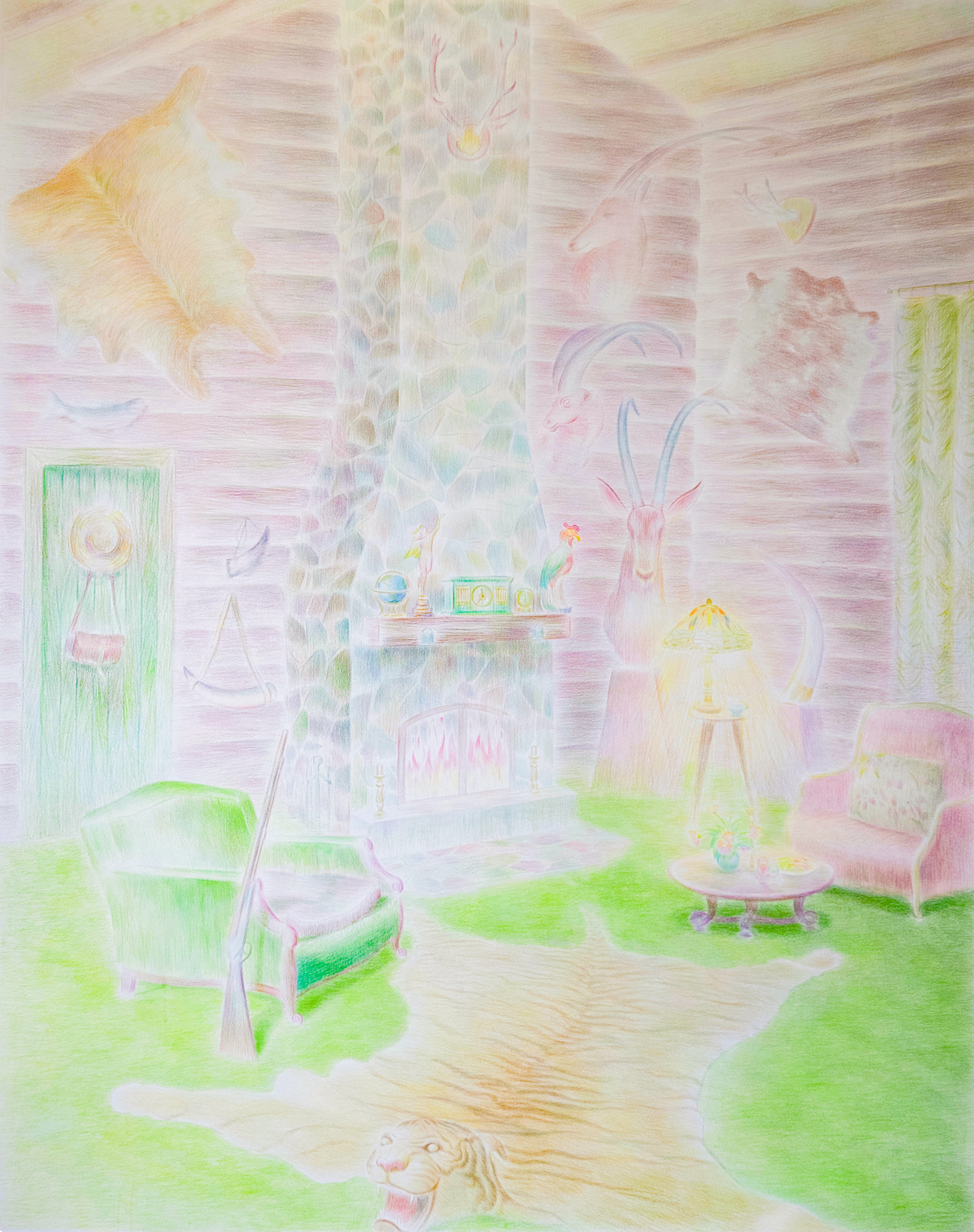
Linger, Color pencil on paper 149 x 118 cm 2022

Treasure seekers, Oil on canvas 45 x 35cm 2023

White Horse Melody, Oil on canvas 66 x 50.5 cm 2023

window,Oil pencil on paper 31.5 x 25.5 cm 2021

Upper East Nose, Oil pencil on paper 31.5 x 25.5 cm 2021

motorcycle, Oil pencil on paper 31.5 x 25.5 cm 2021

the war, Oil pencil on paper 31.5 x 25.5 cm 2021
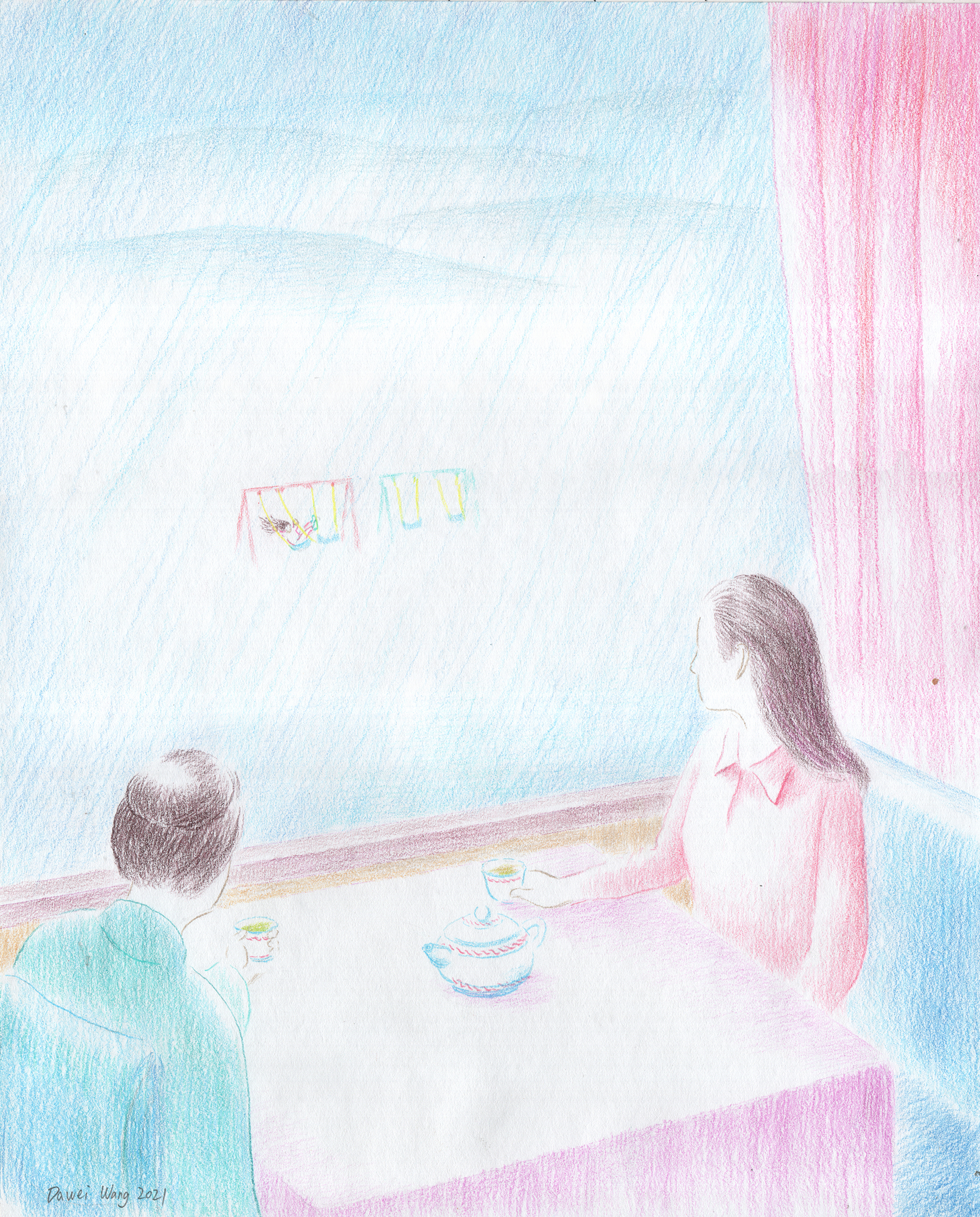
Memory, Oil pencil on paper 31.5 x 25.5 cm 2021

Left-Right, Oil pencil on paper 31.5 x 25.5 cm 2021

Daughter, Oil pencil on paper 31.5 x 25.5 cm 2021

“V” fall in love, Oil pencil on paper 31.5 x 25.5 cm 2021
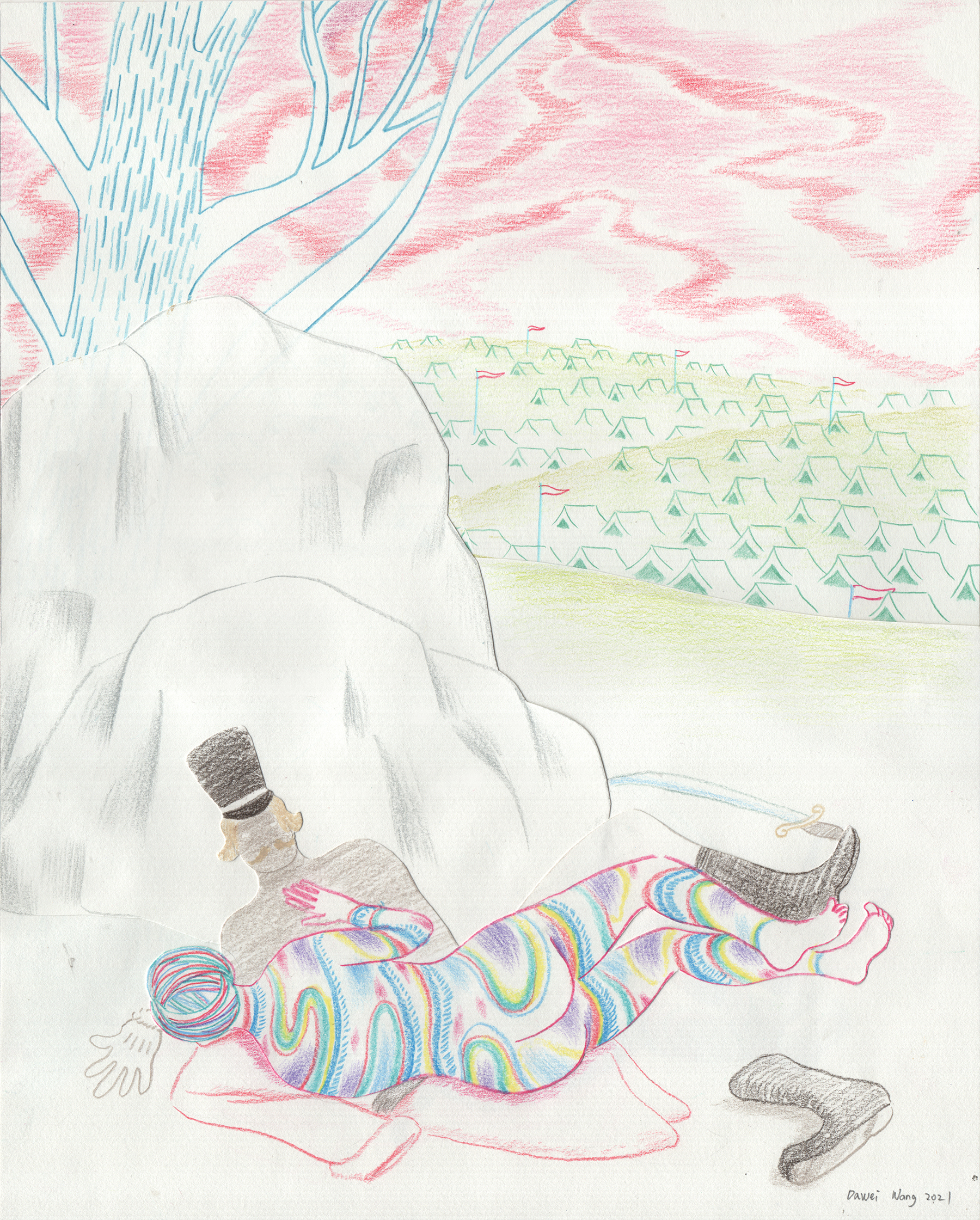
Legend, Oil pencil on paper 31.5 x 25.5 cm 2021

Big Apple, Oil pencil on paper 31.5 x 25.5 cm 2021

mirror, Oil pencil on paper 31.5 x 25.5 cm 2021
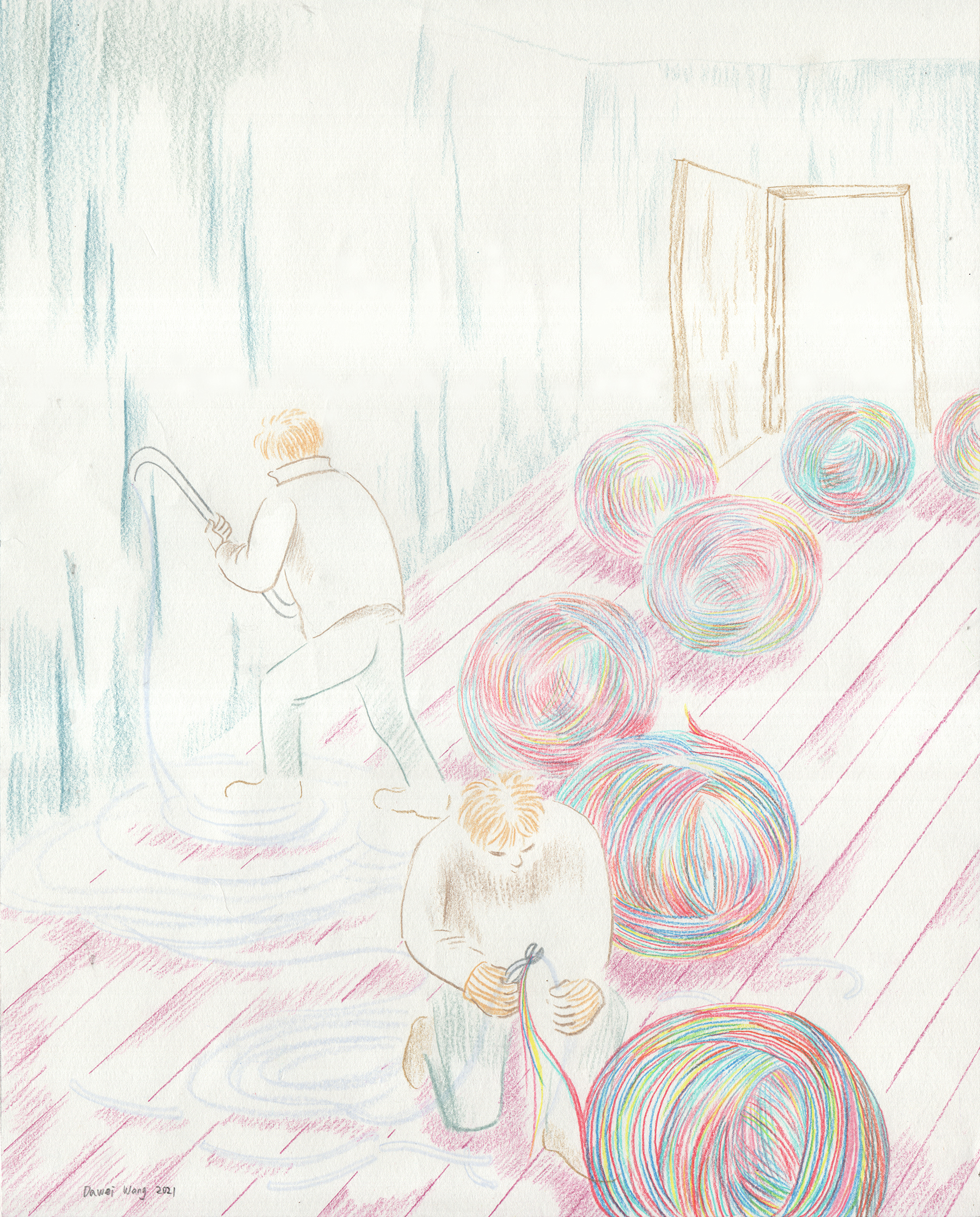
working, Oil pencil on paper 31.5 x 25.5 cm 2021
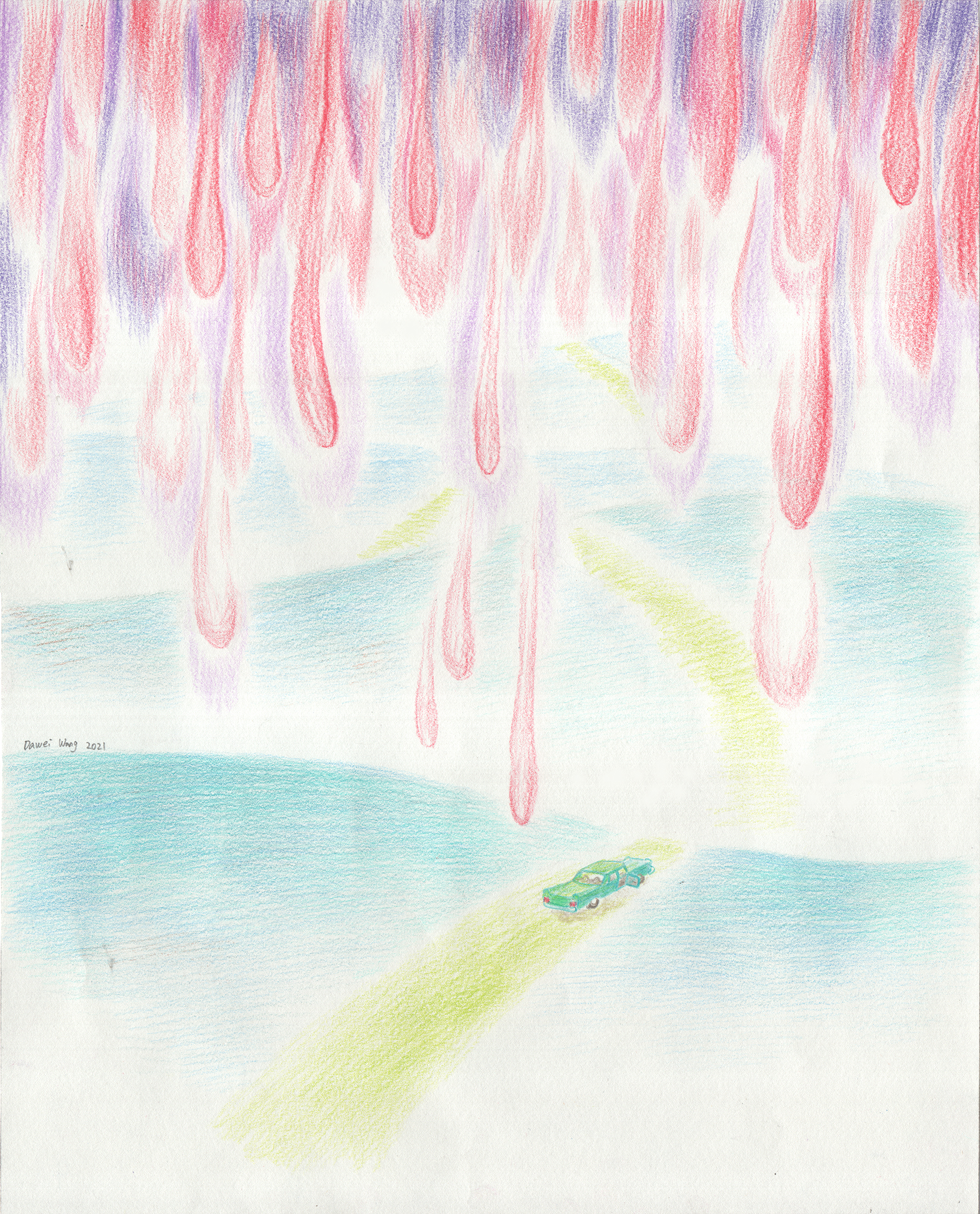
emergence, Oil pencil on paper 31.5 x 25.5 cm 2021

bar, Oil pencil on paper 31.5 x 25.5 cm 2021

Women, Oil pencil on paper 31.5 x 25.5 cm 2021
Art+ Shanghai is pleased to present a solo exhibition by Wang Dawei, whose recent paintings interrogate the uncomfortable interval between lived experience and interior projection. Through his works, Wang positions painting as a site where affect is neither narrated nor illustrated, but constructed: a disciplined staging of atmosphere through which complex emotions become legible without solidifying into univocal representations. The exhibition's intellectual foundation thus rests on a productive tension between diasporic distance and perceptual intimacy. To distance oneself from a place, for Wang, is paradoxically to intensify sensitivity while allowing appearances to blur, producing images that oscillate between precise memory, floating conjecture, and the fragile clarity of a feeling that resists verbal articulation.
Born in 1984 in Shanghai, Wang Dawei developed his artistic practice between Asia and the United States, where he lives and works today. A graduate of Shanghai Normal University (bachelor's in 2009, master's in 2015), he has established a singular voice in the contemporary art landscape since his first solo exhibition at FQ Projects in 2011. His trajectory demonstrates an ascending and coherent path: regular solo exhibitions in Shanghai and New York; notable presence at Shin Gallery in New York in 2025 and 2023 with "Banal Dreams and Poetic Realities"; participation in major international art fairs (Art021 Shanghai, Art Stage Singapore, SH Contemporary, Los Angeles Art Show). This geographic and professional mobility is not incidental: it directly feeds his work, forged in the circulatory condition of immigrant life in the 21st century.
Wang's practice is rooted in field observation and photographic capture: spontaneous gestures in streets, parks, squares, trains, and urban transitional spaces. But the camera functions less as documentary evidence than as a trigger for material and affective recomposition. In his previous works, recurring figures, guards, workers, people sitting distractedly, often appear at measured distance, held at the periphery of the frame or isolated in intermediate spaces. This distance is not indifference, but a deliberate ethical and narrative strategy: it refuses the reductive certainty of psychological explanation in favor of an open, speculative psychology. The viewer is invited to inhabit what Wang calls "the void," an operative silence within the composition that opens the work to projective interpretation rather than narrative closure.
It is precisely here that Wang's affinity with Raymond Carver's short story Cathedral takes on its full significance. In this emblematic minimalist narrative, Carver recounts a narrator's encounter with a blind man, culminating in a moment of silent connection as they draw a cathedral together. The text never explicitly describes the edifice, leaving it to the reader to imagine, to fill the empty spaces with their own interior experience. For Wang, this narrative economy, where a few lines can evoke a world, becomes a pictorial principle. His paintings cultivate a form of minimalism not merely as stylistic restraint, but as a method of activating the viewer's imagination. As with Carver, ellipsis becomes generativity: what is left unsaid, what remains in shadow or off-frame, possesses as much power as what is shown. Wang's compositions resist visual saturation: they preserve zones of indeterminacy where the gaze can wander, where subjective projection can settle. The work thus becomes a space of tacit co-creation between artist and viewer, a threshold where affect is constructed in the interval.
In the recent paintings presented in this exhibition, Wang develops and deepens this poetics of the void through a decisive tonal economy. Washed-out blues, pale greens, powder pinks, and pastel violets function as a rigorous atmospheric grammar: the hues are kept "simple and pure," in the artist's own words, to control the overall mood, lower dramatic contrast, and sustain a dreamlike register that consciously resists photographic realism. These chromatic choices are not arbitrary: they establish a specific emotional temperature, an interior climate where scenes seem suspended in indeterminate temporality, between memory and projection, between fading day and uncertain dawn.
Technically, Wang employs refined layering processes that combine the fluidity of acrylic with the density of oil or pencil. Acrylic washes, diluted with water and applied in translucent layers, sometimes recall the technique of traditional Chinese ink wash, with its subtle gradations and zones of controlled diffusion. This reference is not anecdotal: it inscribes Wang's practice within a double genealogy, between Chinese pictorial heritage and Western modernism. Oil then intervenes for chromatic mixing and detail, producing surfaces of silent vibration, where spaces seem suspended between material presence and imminent disappearance. Contours partially dissolve, figures emerge and withdraw simultaneously, creating a perceptual instability that mirrors the very experience of uncertain memory.
These new works also mark an evolution in the treatment of architectural and urban space. Interiors, empty rooms, silent corridors, anonymous waiting spaces, become charged with latent affective weight. The light, filtered, diffused, almost tangible, sculpts these volumes and creates zones of shadow that invite the gaze to linger, to question what is hidden or partially revealed. Windows, a recurring motif, function as frames within the frame, visual thresholds suggesting an inaccessible elsewhere, reinforcing the sensation of contemplative isolation.
While comparisons with Wilhelm Hammershøi or Edward Hopper naturally emerge through compositional affinity, urban solitude, interiors semi-empty of human presence, melancholic light, Wang's singularity is profoundly historical and existential. These are paintings of today, forged in the secular and circulatory condition of twenty-first-century immigrant life, where the everyday becomes a permanent threshold and where the self is glimpsed, like a reflection in a train window in motion, always partly elsewhere, never fully anchored. This constant mobility, this impossibility of stable belonging, imbues each canvas with a contemporary melancholy that is neither nostalgic nor despairing, but lucid, patient, open to what may still emerge in uncertainty.